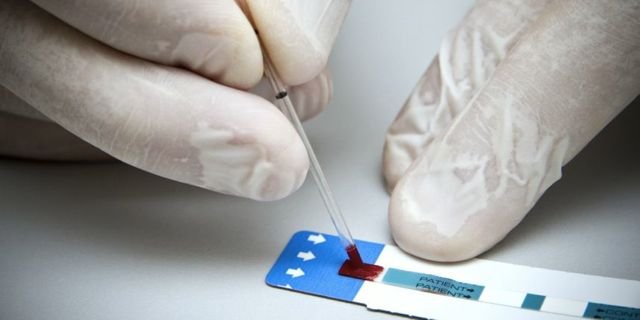
People who receive a reactive result on HIV, hepatitis B or hepatitis C rapid tests carried out at pharmacies in the Loures-Odivelas area will now follow a formal pathway into the local health unit for confirmation and follow-up. The arrangement is set out in a protocol signed on Thursday between the Unidade Local de Saúde Loures-Odivelas (ULSLOD) and the Associação Nacional das Farmácias (ANF), according to Canal S+. The broadcaster reports that it is the first agreement of its kind, creating a link between early detection at the pharmacy counter and clinical confirmation and monitoring within the Serviço Nacional de Saúde.
Why it matters
The two organisations said in a joint statement that the aim is to remove the obstacles that can break the journey between taking a test, receiving a diagnosis and starting treatment, thereby lowering the risk that people drop out of care. Canal S+ reports that the protocol is intended to serve as a reference model for cooperation between community pharmacies and national health service bodies, designed to be broadly uniform and repeatable so that it can be rolled out in stages to other parts of the country.
The stakes are significant because, as the two bodies noted, HIV and hepatitis B and C remain a substantial public health challenge despite the progress made. The statement pointed out that Portugal still records figures above the European average for HIV, with a notable share of late diagnoses, and that some people remain unaware of their infection status. Continuity of care is therefore described by both institutions as especially important in this area of screening.
How the referral works in practice
Under the arrangement, when a rapid test produces a reactive result, the pharmacist provides appropriate counselling. If the person agrees, the pharmacist then activates the referral route agreed with the health services, connecting the individual to ULSLOD for the next steps. The joint statement stressed that a reactive result is not in itself a diagnosis, which is why confirmation procedures and clinical follow-up are essential.
The rapid tests for HIV, hepatitis B and hepatitis C are free of charge and are accompanied by counselling both before and after testing. Participation is voluntary and confidential, and Canal S+ reports that the test can be taken anonymously. The measures sit within the FOCUS programme, which is running in participating community pharmacies in the municipalities of Amadora, Sintra, Odivelas and Loures and is open to people aged over 18.
According to the ANF, community pharmacies are well placed to reach people because of their proximity and their spread across the territory. The association said this allows access without the need for a prior appointment and builds on a relationship of trust with the public. In its view, these features bring screening closer to communities and also reach people who, for various reasons, have less contact with health services or are less frequently tested.
A template for the rest of the country
Beyond the immediate referral route, both signatories framed the agreement as a template for how community pharmacies and national health service providers can work together. Canal S+ reports that the model is intended to be applied in a broadly consistent way and to be replicable, with a phased introduction planned in other regions. For now, the practical effect is concentrated in the Loures-Odivelas catchment area and the four municipalities covered by the FOCUS programme.
The protocol does not change what the tests themselves involve: they remain free, voluntary and confidential, with counselling at both ends of the process. What it adds is a defined next step for anyone whose rapid test comes back reactive, so that the result leads to confirmation and clinical monitoring rather than to an interrupted pathway.
Watch for the phased extension of the model to other territories, which the two organisations have said is the intention behind making the protocol uniform and repeatable.